
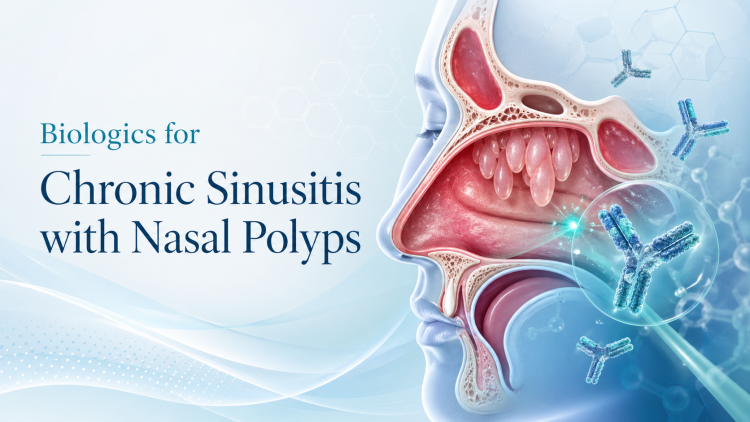
Biologics for Chronic Sinusitis with Nasal Polyps: A Proud Moment and an Update for Patients
I am delighted to congratulate my son, Michael F. Armstrong, MD, on his recent publication, “Biologics in Chronic Rhinosinusitis with Nasal Polyps: The Otolaryngologist’s Perspective”.
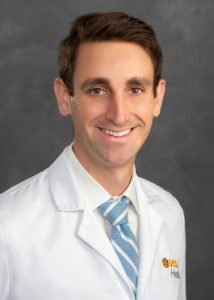
Michael Armstrong, MD, Otolaryngology
After completing advanced fellowship training in rhinology and endoscopic skull base surgery at the University of North Carolina with Dr. Brent Senior, he has now joined the faculty at VCU Health. Patients may learn more about Dr. Michael Armstrong here: Michael F. Armstrong, MD – VCU Health.
I am especially proud to see him pursuing the same deep interest in sinus disease, nasal polyps, and rhinology that has shaped so much of my own career. His review arrives at an important time, because biologic medications are changing the conversation for selected patients with chronic rhinosinusitis with nasal polyps (CRSwNP).
What are biologics?
Biologics are highly targeted injectable medications that calm specific inflammatory pathways rather than broadly suppressing the immune system. For patients with nasal polyps, they may reduce congestion, improve sense of smell, decrease the need for oral steroids, and in some cases reduce the need for additional surgery. You can read more on our page about biologics (monoclonal antibodies).
What did the article conclude?
The main message is balanced and practical. Biologics are an important advance, and there are now several approved options for CRSwNP in the United States. At the same time, sinus surgery remains a very effective treatment and is often more cost-effective. In other words, biologics do not replace surgery for everyone. Instead, the best treatment depends on the individual patient.
That matches what we see in real life. Some patients do very well with careful medical management, including saline irrigations, nasal steroid sprays or rinses, and allergy treatment. Some benefit most from endoscopic sinus surgery. Others—especially those with severe recurrent polyps, asthma, aspirin sensitivity, or repeated need for oral steroids—may be good candidates for a biologic.
When might a biologic make sense?
A biologic may be worth discussing when nasal polyps keep coming back despite appropriate treatment, when smell loss and congestion remain severe, when asthma and sinus disease travel together, or when a patient is needing repeated prednisone bursts. We have also recently written about one of the newer options in this area: What TEZSPIRE means for chronic sinusitis with nasal polyps. These decisions should be individualized after nasal endoscopy, review of prior treatment, and often sinus CT imaging.
What this means for patients at Richmond ENT
At Richmond ENT, we believe in choosing the right treatment for the right patient. That may mean office-based care, steroid irrigations, treatment of allergies, advanced imaging, sinus surgery, or biologic therapy. We also remain active in research involving chronic sinusitis and nasal polyps. You can learn more about our research involvement here.
If you have chronic sinusitis with nasal polyps, loss of smell, repeated infections, or symptoms that keep returning after treatment, we would be glad to evaluate you and discuss whether biologic therapy, surgery, or a combination approach makes the most sense for your situation.